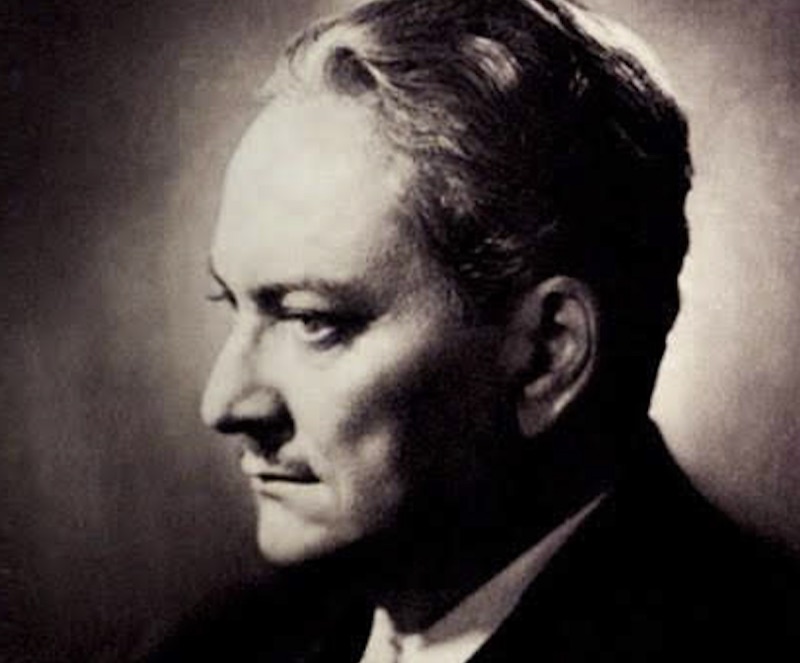
The Secret Teachings of All Ages. Encyclopedic study of the world's mystery traditions.
hermeticismmasonrysymbolismphilosophy
A Canadian-born autodidact, Manly P. Hall published The Secret Teachings of All Ages at the age of twenty-seven, a folio of the symbolic philosophy of every great Western mystery tradition that has remained in print for nearly a century.
He founded the Philosophical Research Society in Los Angeles in 1934, gathered an extraordinary library, lectured across half a century, and produced more than two hundred volumes on subjects ranging from Pythagoras to Freemasonry to the Bhagavad Gita.
Hall is the encyclopedist, the patient one. His voice carries the calm authority of a man who has read everything and is happy to spend an evening telling you what he found.
Books
✨ MANLY P. HALL 📚 Complete Audiobook Collection 🎧 Uncover the Secrets of Ancient Knowledge ✨
Hall's great folio. A single volume that gathers, in 45 essays and roughly 200 colour plates, the symbolic philosophy of every major Western mystery tradition: the Egyptian and Greek initiations, the Hermetic and Pythagorean schools, Qabbalah, alchemy, Rosicrucianism, Masonic symbolism, the Tarot, mystic Christianity, and the strange persistence of the same teaching under a hundred different masks. Written when Hall was twenty-seven and in print for nearly a century, it is still the one book in English where the whole tradition stands in one room and speaks with one voice.
Dr. Athena's note Do not read it from front to back. Open it at a chapter that calls you, sit with the plates, and let the connections form. Hall built it as a temple, not as a textbook. The reader who treats it as a textbook leaves with notes; the reader who treats it as a temple leaves changed.
The hidden path of fire that runs through every mystery tradition. Hall opens with the Druid priests tending their sacred groves, then leads through the Egyptian initiate descending into the pyramid, the alchemist watching the slow conjunction in the retort, the Knight of the Holy Grail riding into the wilderness in search of a vision. Each chapter is a meditation on the same single Flame seen through a different window: the Ark of the Covenant, the sacred city of Shamballa, the mystery of the pyramid. The book ends as it began, with the Flame still burning.
Dr. Athena's note Hall is twenty-two when he writes this and the prose still has the velocity of a young man who has just seen something. Read it as the doorway through which the rest of his work walks.
The first of Hall's Masonic studies, written in 1923. He takes the Hiram Abiff legend, the master builder of Solomon's temple, slain by three ruffians, raised by the strong grip of the lion, and reads it not as guild history but as a complete map of the inner journey. The apprentice rough-hews the stone of his nature; the fellowcraft learns the tools; the master is slain in the body and raised in the spirit. The five chapters trace this passage with the patience of a teacher who has walked it.
Dr. Athena's note A book written for Masons, but it is really for anyone who has felt the small death that has to happen before the larger life can begin. The Lodge is the soul.
The sevenfold constitution of the human being, drawn from the Egyptian, Hindu, and Western esoteric traditions. Hall maps the bodies one by one: the physical, the etheric, the astral, the mental, the causal. He moves through the three worlds the soul inhabits, the centres along the spinal column, the embryology of the soul as the older schools described it, and the symbolic structure of the body as it appears in temple, tabernacle, and church. A small book that has been quietly used as a textbook by serious students for a century.
Dr. Athena's note Many maps of the inner body exist and they disagree. Hall does not try to reconcile them. He shows you what each tradition saw, and lets the resonance teach you which one you are looking at.
Hall's 1929 companion volume to *The Secret Teachings of All Ages*. Where the great folio shows the symbols, this book walks through the philosophy that gave rise to them: Pythagoras and the mathematics of the cosmos, Plato and the world of forms, the Orphic and Eleusinian mysteries, the Hermetic and Neoplatonic schools, and the silent transmission that carried the inner teaching from the temples of Egypt to the academies of Greece and into the Christian and Islamic mystical traditions. Read it after the folio, or before, and the symbols begin to speak.
Dr. Athena's note The folio is the cathedral. This book is the walking tour. If you have ever opened *Secret Teachings* and felt overwhelmed, start here.
Magic stripped of theatre, of costume, of stage props, and read as what it has always been at its source: the lawful direction of attention, will, and feeling toward the unseen ground from which the seen world arises. Hall draws on the Hermetic, Neoplatonic, and Christian-mystical traditions to lay out what the practice actually requires, what distinguishes the true operator from the deluded one, the long discipline of self that must precede any operation, and the cost paid by those who tried to short-cut it. A bracing corrective to a word that has been almost entirely misunderstood.
Dr. Athena's note The word "magic" repels serious readers and that is a pity. Hall earns the word back. The sacred science is just attention used as it was meant to be used.
The most practical book Hall ever wrote. Published in 1942 for students who wanted a working manual rather than another study of symbols, it lays out a step-by-step program of inner disciplines: right thinking, right action, the regulation of attention, the building of character, the slow construction of an interior life that can hold what the outer life keeps trying to break. The chapters move from the obvious foundations into the subtler work that follows.
Dr. Athena's note Hall called this book his most useful one. He meant it. Not the most beautiful, not the most learned, the most *useful*. Read a chapter and try the discipline before reading the next.
Alchemy not as proto-chemistry, not as a failed pursuit of physical gold, but as the conscious transmutation of attitudes. Lead is the heavy, automatic disposition of the soul that has not yet been worked. Gold is the same soul after the slow fire has done its work. Hall walks through the stages of the operation as the old alchemists described them, calcination, dissolution, separation, conjunction, fermentation, distillation, coagulation, and shows how each describes an inner passage that any honest seeker can recognise from the inside.
Dr. Athena's note Whoever has lived long enough has felt the lead. Hall describes the slow fire that turns it.
Hall's commentary on fifteen rare diagrams drawn from the Rosicrucian and Qabbalistic traditions, mostly from the seventeenth and eighteenth centuries. The Tree of the Sephiroth in its many forms, the four worlds of Atziluth, Briah, Yetzirah, and Assiah, the divine names and their correspondences, the alchemical symbols of salt, sulfur, and mercury, the symbolic geometry of the Great Work, and the strange visionary diagrams that show creation itself unfolding. A visual entry into the same teaching that the great folio approaches through prose.
Dr. Athena's note Sit with a diagram before you read its commentary. The diagram is the teaching; the words are the bridge.
Hall traces the symbolic continuity between Egyptian temple initiation and the symbols, rituals, and degrees of modern Masonry: the rough and the perfect stone, the apron and the sacred garment, the lost word that is the unutterable Name, the resurrection of Hiram and the resurrection of Osiris, the orientation of the temple to the cardinal points, the three pillars of the Lodge and the three regions of the Egyptian afterlife. A long, illustrated study with hundreds of plates, arguing that the Lodge is the lineal heir of the Egyptian mysteries.
Dr. Athena's note A long, careful study. Hall is at his best when the lineage is this old. Read for the continuity, not for the conclusions.
A focused lecture on the parallel currents of the Rosicrucian and Masonic streams during the seventeenth and eighteenth centuries, the age that the schoolbooks call the Enlightenment. Hall sketches the silent network of awakened thinkers, scientists, statesmen, and mystics who carried the inner teaching through the turning of the modern world: their public faces in the academies and parliaments of Europe, their private faces in the lodges and Rosicrucian colleges, and the way they shaped the founding ideas of the modern democratic age without ever appearing to.
Dr. Athena's note The "Enlightenment" we are taught in school is the outer one. Hall sketches the inner one.
Hall on what occultism actually is when stripped of theatre, superstition, and the cheap thrills the word has come to suggest. He works through the foundational principles that must be in place before any practice produces a real result: the lawful study of forces and energies, the hidden constitution of the human being, the relationship between the seen and unseen worlds, the disciplines of attention and will that any genuine inner work requires, and the patient ethics that distinguish the true student from the merely curious one. A doorway essay for serious beginners.
Dr. Athena's note Hall is careful with this word "occult". He means hidden, not forbidden. Read it as a clear map of inner work, and the theatre falls away.
Hall on the law of cause as the only honest exit from the past. Not denial, not forgetting, not the cheap counsel to "move on", but the patient placing of new causes in the present moment that, given time, will compose a different future. He examines why the past has the grip it has, why the usual remedies fail, what regret actually is and how it is healed, and what kind of present action begins to dissolve the hold of an old event without pretending the event did not happen.
Dr. Athena's note No one is freed by being told to forget. Hall does not say that. He says: place a new cause, today, and watch what the future does.
The figure of Melchizedek as the archetype of the priest-king who appears in every tradition: without father, without mother, without beginning of days or end of life. Hall introduces him, then turns to fire as universal deity, to man as the great symbol of the mysteries, and finally to the sacred fire that runs along the spine in every contemplative tradition that has ever taken the inner body seriously. The four sections move from cosmos to body to the awakened principle inside the seeker.
Dr. Athena's note Melchizedek is one of the strangest figures in scripture and Hall does not solve him. He shows you why the strangeness is the point.
A late, personal lecture. Hall in his own voice on what he learned in seven decades of reading, teaching, writing, and quietly observing the human being. He sets out his working philosophy in plain terms: the convictions he kept, the speculations he put down, the ethics he lived by, the questions he never fully answered, and the small daily practices that turned out to matter more than the grand systems. A short, intimate piece of writing from a teacher near the end of his work.
Dr. Athena's note When a teacher tells you their own philosophy at the end, listen carefully. The framework is small. The lived ground is enormous.
A short, practical lecture on the discipline of thought. Hall opens with the causes of the disease, scattered attention, drift, the modern habit of letting the mind run wherever the day pushes it, and then turns to the cure, the slow work of gathering attention back into one place, of choosing what to dwell on, of refusing the cheap thought even when it offers a moment's relief. Right thinking is not positive thinking; it is honest thinking under discipline, and Hall is patient with the reader who has not yet tried it.
Dr. Athena's note Read this when the mind is too busy. Hall is gentle with the busy mind, and very clear about what it costs.
A six-part lecture series on health as a spiritual condition rather than a mechanical one. Hall on the body as the visible portion of the soul, on the way attitudes and emotions print themselves into the physical organism, on the role of the breath and the spine in the older healing traditions, on the conditions, inner and outer, under which healing tends to occur, and on the careful distinction between symptom and cause. He moves with a doctor's respect for the body and a contemplative's respect for what stands behind it.
Dr. Athena's note Hall is careful here. He does not promise miraculous cures, and he does not dismiss the body. He describes the conditions, inner and outer, under which healing tends to occur.
A four-postulate study of the Rosicrucian fraternity: its sudden appearance through the seventeenth-century manifestos (the Fama Fraternitatis, the Confessio, the Chymical Wedding of Christian Rosenkreutz), its sources in Hermetic and alchemical philosophy, its symbolic teaching of the rose flowering on the cross of matter, and the long question of whether the order is an organisation of men or a state of soul. Hall does not try to settle the historical question; he shows the inner one.
Dr. Athena's note Hall does not answer the question of whether the Rosicrucians "really existed". He shows you why the question is the wrong one.
A two-part study of the master-disciple relationship as it has lived in the East for thousands of years and as it now passes, often misunderstood, into the West. Hall asks the plain questions: who is the true teacher, how is the false one recognised, what does discipleship actually require, why are most who seek a guru not yet ready to meet one, what is the inner state that ripens a disciple for transmission, and what is the responsibility that ripens a teacher for giving it. A bracing lecture for the age of teachers.
Dr. Athena's note Hall says the plainest thing: when the disciple is ready, the teacher appears, and not a day sooner.
Hall's seven-part study of the Buddha: Buddha the friend of man, the fundamental philosophy of Buddhism, the Ten Commandments of the tradition, the two great laws (karma and rebirth), the two great virtues (wisdom and compassion), the Noble Eightfold Path, and Nirvana as the culmination of extinction. He works against the West's standard misreadings, Buddhism as nihilism, as pessimism, as escape, and presents the teaching as the great Eastern technology of awakening that it has always been.
Dr. Athena's note Hall is not a Buddhist, but he reads the Buddha with the courtesy a great teacher gives another great teacher. That courtesy is itself part of the teaching.
A two-part esoteric reading on the inner ascent: how the soul finds its way home, what the traditional accounts of "heaven" actually describe, and why the old maps still apply even when the language has changed. Hall draws on Christian, Taoist, and Hermetic sources to sketch the geography of the inward journey, the sequence of states the awakening soul passes through, and the misunderstandings about heaven that have made the doctrine sound childish to modern ears when it was always meant to describe a present possibility.
Dr. Athena's note Heaven, in the older sense, is a state, not a place. Hall is careful to say so. The way is open today.
On the invisible currents that shape a life: the creatures of the elements, natural principles, the mental and elemental forms generated by our own emotions, the ghosts and specters of unfinished business that haunt the world of the half-awake, and the great Dweller on the Threshold that every serious aspirant must face. Five chapters that move from the outermost layer of unseen life inward toward the soul's confrontation with what it has itself created.
Dr. Athena's note The unseen forces are not mysterious. They are the things we stopped noticing. Hall describes them in plain language and they become workable.