Symphony No. 38
Prague · 432 Hz
Three movements of unbroken radiance. Written for a city that adored him, it carries the lightness of an artist at the height of his powers.
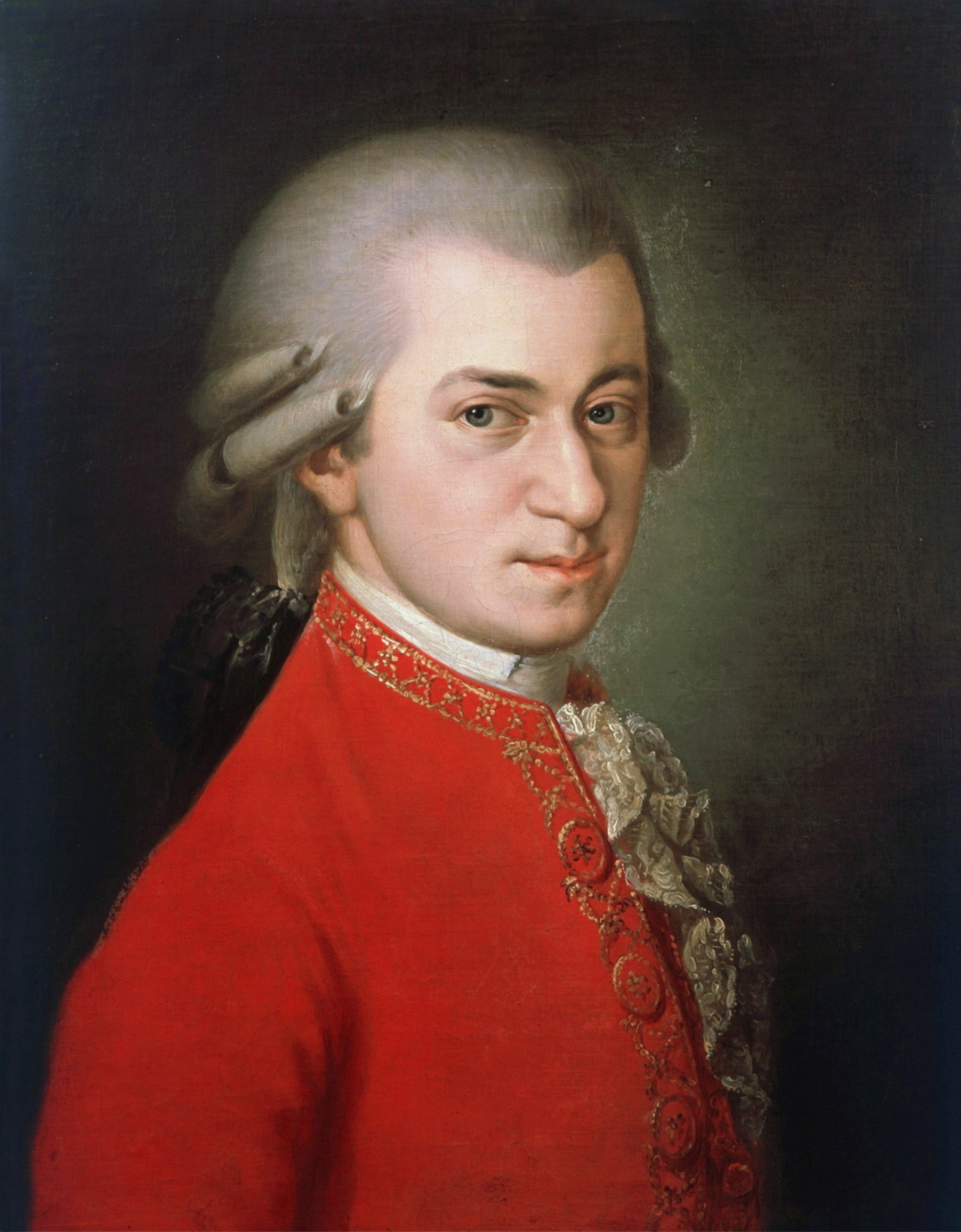
Composer of unhurried perfection. Mozart worked in the open daylight of the Viennese classical style, and in that bright air he wrote music of the deepest interior. From the dancing bells of the Turkish March to the eight unfinished bars of the Lacrimosa, the listener walks the whole range of one human life made luminous.
Three movements of unbroken radiance. Written for a city that adored him, it carries the lightness of an artist at the height of his powers.
Composed in four days, on the road, as a gift to a host. Speed leaves no trace; only grace.
Festival music made noble. A wedding piece raised to the height of a symphony, then never let down.
His last symphony. The fugal finale folds five themes into one ascending fabric. The whole heaven of his late style.
The shadowed sister of the Jupiter. The opening sigh is one of the most quoted phrases in all of music.
Mozart's great minor-key sonata. The drama of opera condensed to one keyboard.
Four movements that everyone has heard, and few have heard well. Charm so steady it becomes a discipline.
A bright Salzburg symphony, written just before he broke with the city for good.
The finale of Piano Sonata No. 11, taken on its own. Janissary bells and a melody that refuses to leave.
Oboe, clarinet, horn, bassoon, conversing as equals. A small concerto-symphony of late-classical conversation.
The "easy" sonata. Mozart called it for beginners; pianists spend a lifetime learning what makes it hard.
Theme and variations, then the famous Alla Turca. The whole sonata in one open, singing line.
A late sonata of clear-water transparency. Nothing hidden, nothing missing.
Violin and piano on equal footing, each finishing the other's thought.
A concerto of warm daylight. Solo line and orchestra trading lines like two friends in long conversation.
The sonata that opens the door to his Vienna years. Brilliance held in classical restraint.
An early Salzburg sonata. Bright clarity, the lines already singing in their own voice.
A sonata born of grief. Written in Paris while his mother lay dying; the minor key never falters.
The eight bars he completed before his own death. The most famous unfinished sentence in music.
The first of the eighteen. A young master settling into the form he would carry his whole life.
Three movements of intimate dialogue between violin and keyboard.
A late sonata, the writing for both instruments full and equal.
Sunlight in F major. Three movements of unbroken serenity.
Late chamber writing in which the two instruments share a single breath.
An early sonata of bright, unforced charm. Mozart at twenty already in full possession of his voice.
A short sonata, the writing economical, every line earned.
A sonata of poised, conversational warmth.
A late, generous sonata. The two instruments at full equality, the music open and unhurried.
The same celebrated symphony, here in its standard tuning. A second reading of the famous sigh.
A short, balanced sonata; intimate scale, generous spirit.
A late sonata of breadth and gentle dignity.
The famous "easy" sonata, in standard tuning. The simplest opening in all of Mozart, and still arresting.
Two movements of tender, transparent writing for violin and piano.
Composed for and tailored to the Parisian orchestra. Brilliant exterior, classical heart.
The second of the eighteen. Cheerful, clear, the form already fully his own.
A late sonata; long-breathed phrasing, generous proportions.
A small dance with sleigh bells. Three minutes of pure winter joy.
A short, early symphony of Salzburg vigor. Compact, clear, propulsive.
The last of his published piano sonatas. Open, late-style writing.
A sonata for two players at one keyboard. Two voices passing one melody back and forth.
A bright sonata of straightforward, generous lyricism.
A late sonata of equal-voiced dialogue between violin and keyboard.
Early Salzburg writing; a sonata of clean, singing lines.
A sonata of late, untroubled grace. Vienna brightness in three movements.
A sonata of poised, classical conversation between two equals.
Two short movements of intimate, late-classical writing.
A sonata of quiet equilibrium between violin and keyboard.
For long sessions of work, study, or contemplation.
A wide anthology of the most famous pieces. Forty-five minutes of sustained Mozartean clarity.
The full Mass in C major, written for the annual coronation of a miraculous image of the Virgin at Maria Plain. Sacred music in its festival mode.
Mozart's last work, left unfinished at his death and completed by his pupil Süssmayr. Music at the threshold of another world.
The full opera, conducted by Karajan. A Masonic fairy tale; initiation as theatre.
Four and a half hours of the most-loved Mozart. For long sessions of work, study, or contemplation.
Ninety minutes of symphonic high points. A wide arc through the late-classical orchestral world.