Pas de Deux
from The Nutcracker
The Sugar Plum Fairy and her Cavalier. Eight bars descending on the celesta and the ballet enters another world.
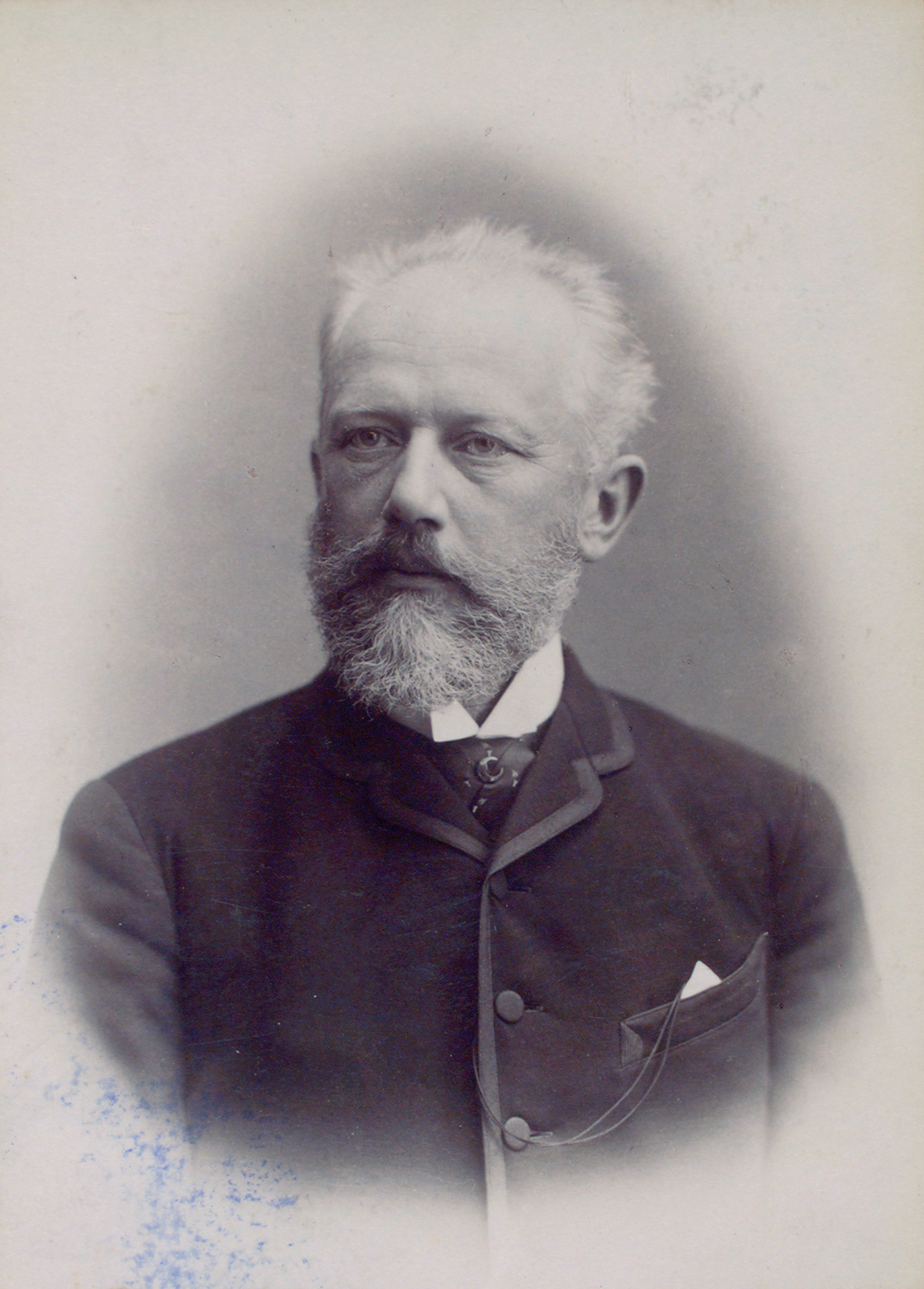
Composer of the singing heart. Tchaikovsky carried the Russian folk melody into the European concert hall and gave the ballet its modern form. He wrote the music everyone hums without knowing they hum it. Beneath the bright surface ran a darker current; his last symphony, the Pathétique, ends in a long descent into silence. From the celesta of the Sugar Plum Fairy to that final movement, the listener walks the whole range of his voice.
The Sugar Plum Fairy and her Cavalier. Eight bars descending on the celesta and the ballet enters another world.
The great Act I waltz. The court dances under the lake of swans; the orchestra makes the lake speak.
A short waltz in a remembered key. The Russian soul through the French salon.
Harp cadenza, then the long-breathed melody. The most loved waltz in all of ballet.
A patriotic overture on Serbian themes, written for a Red Cross benefit during the Russo-Turkish war.
The first-act snow scene. Children's chorus, swirling strings, winter as enchantment.
A minute and a quarter of folk-dance momentum, ending almost before it begins.
A second reading of the great Nutcracker waltz, in 432 Hz tuning.
The Garland Waltz from Act I. Aurora's birthday in the form of one long melodic line.
Variations for cello and orchestra in homage to the eighteenth century. A nineteenth-century Russian writing as if from Vienna.
The overture to his Pushkin opera. Three card-suits, one obsession, and the ghost of an old countess.
The final pages of his most famous concert piece. La Marseillaise crushed by the Tsar's hymn and the bells of victory.
Excerpts from the suite he assembled himself from the ballet. Concert miniatures of his most beloved score.
A second reading of the Swan Lake waltz, in 432 Hz tuning.
October, from his year-long cycle of piano miniatures. Tolstoy wept when he heard him play it.
The final movement of his last symphony. A slow descent that ends, unlike anything before it, in silence.
A second reading of the Rococo Variations, in 432 Hz tuning.
His "Ukrainian" symphony, woven from folk material. The young composer turning to the songs of his country.
The famous oboe theme of Odette. The lake at moonlight; the cursed swan turned woman.
A second reading of the Garland Waltz, in 432 Hz tuning.
The slow movement of the Fifth. The horn melody that everyone remembers, in unhurried orchestral gold.
The love-theme that everyone knows, set inside the storm of feuding houses. His first masterwork.
A second reading of the great Pas de Deux, in 432 Hz tuning.
A short concert piece for violin and orchestra. Melancholy as serenade.
A second reading of the Sentimental Waltz, in 432 Hz tuning.
Two dances from his Pushkin opera. The ballroom that becomes a confession.
For long sessions of work, study, or contemplation.
His first and most famous piano concerto. The opening chords known to everyone; the rest a Russian Romantic giant.
The quartet whose Andante cantabile moved Tolstoy to tears. Chamber music at the height of his Russian-folk vein.
String sextet of his maturity. Italian sun written in Russian hand.
Forty-six minutes of the most loved Tchaikovsky. For long sessions of work or contemplation.