Brandenburg Concerto No. 4
BWV 1049 · 432 Hz
Solo violin and two recorders against the strings. The most luminous of the six Brandenburg concerti.
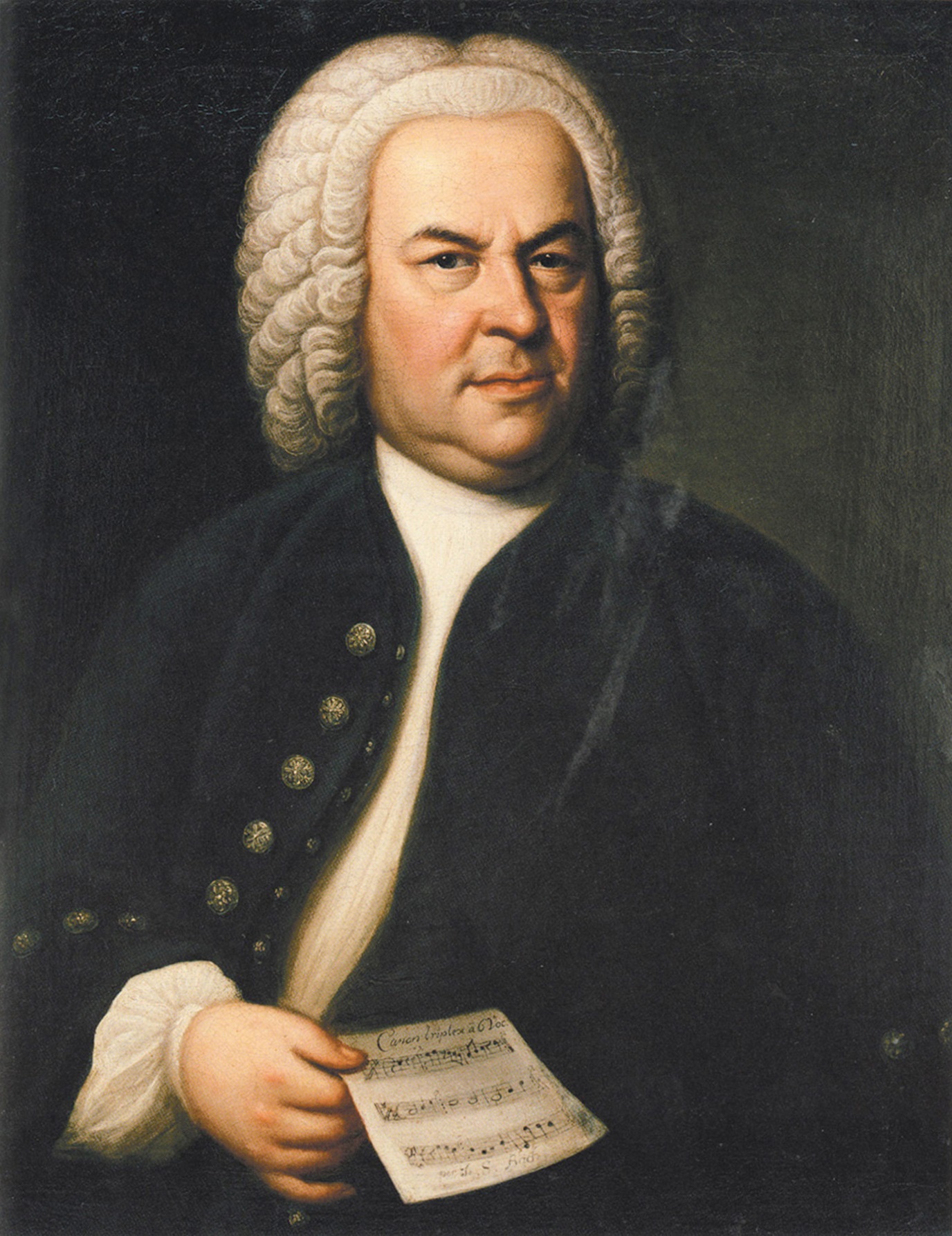
Composer of the inner architecture. Bach signed his manuscripts Soli Deo Gloria, and he wrote as if the score were a cathedral built by hand. He served as a town Kapellmeister, a parish cantor, a court harpsichordist; he raised twenty children and left a body of work that is still the structural ground of Western music. From the unaccompanied cello suites to the St. Matthew Passion, the listener walks through one room of his mind after another.
Solo violin and two recorders against the strings. The most luminous of the six Brandenburg concerti.
A second reading of the Fourth, in standard tuning.
The first piano concerto in history. Bach gives the harpsichord a long solo cadenza of pure invention.
Two horns, three oboes, bassoon, strings. The largest ensemble of the six, in festival mode.
A second reading of the First, in standard tuning.
Three violins, three violas, three cellos. The most compact of the six, woven from a single architectural impulse.
Two violas, two viola da gambas, cello, double bass, harpsichord. No violins. A study in viola-toned shadow.
Trumpet, recorder, oboe, violin. The four soloists of the Second, in standard tuning.
The complete cantata that gave the world its most beloved chorale. Heart, voice, and quiet glory.
The Second with its high D trumpet solo, in 432 Hz tuning. The brightest of the six.
A solo violin sonata in four movements. Counterpoint extracted from a single instrument.
A second reading of the Sixth, in standard tuning. The same viola-toned ensemble.
The minor-key cello suite. Six movements of solitary descent and return.
The suite that contains the Air on the G string. Trumpet, oboe, strings; ceremonial joy.
The closing Chaconne from the Partita No. 2 for solo violin, in a contemplative reading.
The Concerto for Two Violins. Two solo lines weaving the same melodic thought.
The fourth suite, played by Yo-Yo Ma. The most architecturally complex of the six.
The lute or solo violin transcription of the Sixth Partita opening. Dance suite as keyboard meditation.
A second reading of the D minor suite, in 432 Hz tuning.
The great Chaconne partita played by Arthur Grumiaux. Five movements ending in one of the summits of Western music.
The largest of the six suites, written for a five-string cello. Berner brings out its scale.
The bright C major suite. The most direct and joyful of the six.
The first of the six sonatas and partitas for solo violin. Counterpoint inside a single string.
A second reading of the C major suite, in 432 Hz tuning.
Yo-Yo Ma's reading of the Sixth Suite. The largest of the six brought to its full scale.
The most loved of the six. The Prelude that opens it is one of the most recognizable melodies in music.
Two oboes, bassoon, strings. The opening suite of the four; French-overture style.
A second reading of BWV 1043, in 432 Hz tuning. The two solo violins in canonic dialogue.
The C major sonata for solo violin. A long fugue at its center, one of the most demanding in the repertoire.
A second reading of the G major suite, in 432 Hz tuning.
A third reading of the celebrated double concerto. Two solo lines weaving the same melodic thought.
The A minor sonata for solo violin. Four movements built around a central fugue.
A second reading of the Fifth, in standard tuning. The historic harpsichord cadenza intact.
Three trumpets, timpani, oboes, strings. The most festive of the four orchestral suites.
A second Yo-Yo Ma reading of the E-flat suite.
The B minor partita for solo violin. Four movements with their doubles, dance music as discipline.
The Air from Orchestral Suite No. 3 in its full orchestral form. The most loved single page Bach ever wrote.
The dark C minor suite. Originally written for an unusual scordatura tuning, the most shadowed of the six.
A second Grumiaux reading of the Chaconne partita, in standard tuning.
A second reading of the A minor sonata, in standard tuning.
A second reading of the Third, in standard tuning.
Complete works at the highest scale. For the longest sessions of work or contemplation.
An aria and thirty variations, written for an insomniac count. The most architecturally complete set of variations ever composed.
Berner's readings of the Six Cello Suites gathered in one long sitting. Over two hours of solo cello as inner discipline.
The complete Passion. Almost three hours; the highest summit of Western sacred music, scored for double chorus, double orchestra, and the voice of the Evangelist.