Slavonic Dances
Bohemian and Slavic folk rhythms taken into the concert hall. The score that carried his name across Europe.
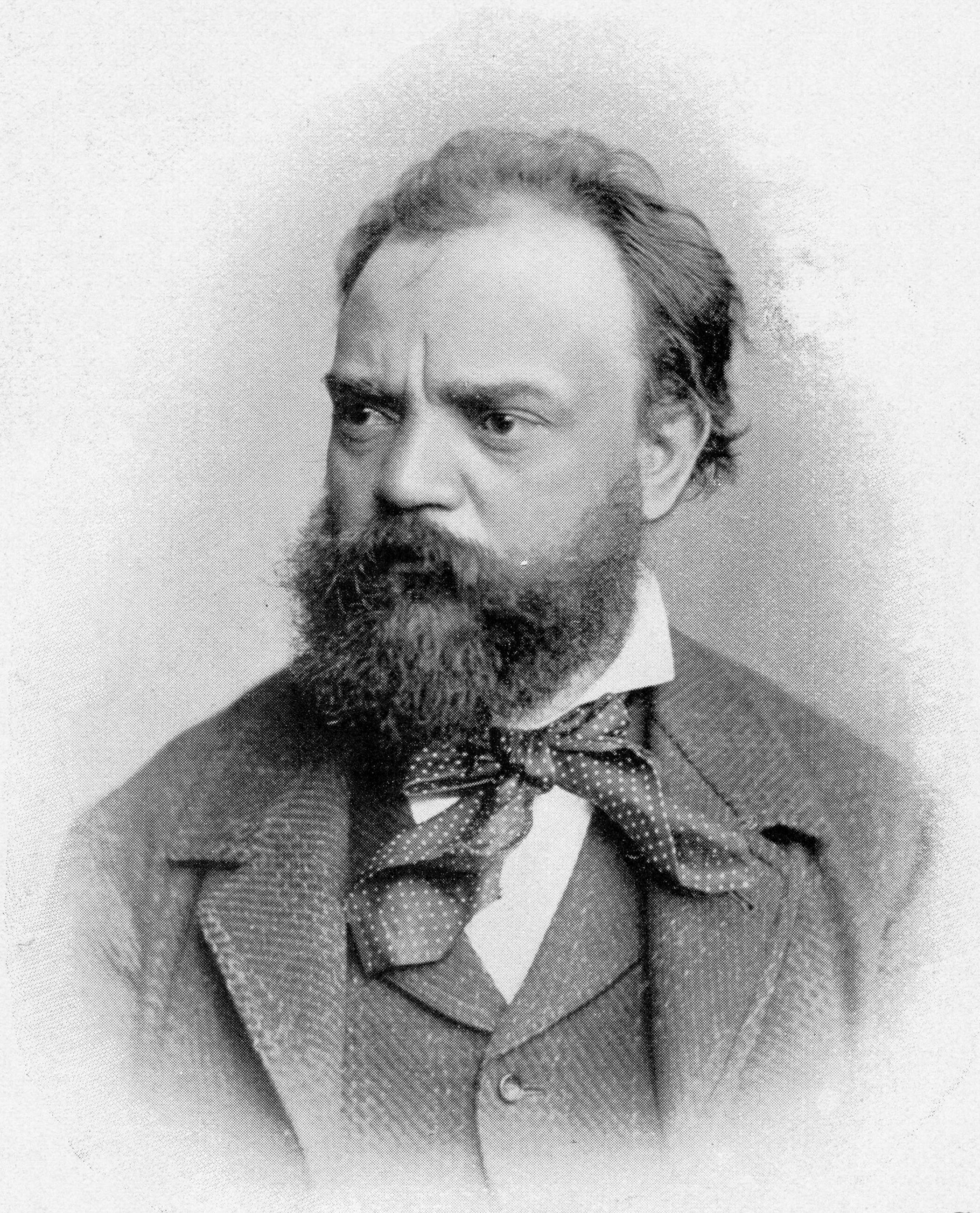
Bohemian composer of song and silence. Dvořák was a village butcher\'s son who became director of the National Conservatory in New York and wrote his Ninth Symphony with the plantation songs of the American South in his ear. He carried Czech folk material into the European concert hall and never lost the longing for home. From the Slavonic Dances to the Stabat Mater, the listener walks the whole range of one human voice grounded in the village and opened to the world.
Bohemian and Slavic folk rhythms taken into the concert hall. The score that carried his name across Europe.
Written in New York in 1893, full of plantation song and Native American melody. The most famous symphony ever composed in America.
Five movements for string orchestra in the warm Bohemian manner. Composed in twelve days and never revised.
A suite written during his New York years, set in five movements of folk-song clarity.
A short concert piece in his most lyrical Czech mode.
The final movement of the New World. The most famous symphonic conclusion of the nineteenth century.
His concerto for violin and orchestra, written for Joseph Joachim and full of Czech inflection.
One of the ten Legends. Folk balladry made symphonic; a story whose hero is the orchestra.
His farewell concerto, written near the end of his American years. The cello sings as he looked homeward.
For long sessions of work, study, or contemplation.
His great Marian cantata, composed in mourning after the death of three of his children. An hour and a half of grief carried into prayer.
An hour and a half of the most loved Dvořák. For long sessions of work or contemplation.
A second complete reading of the Stabat Mater, in 432 Hz tuning. The same passage from sorrow into light.